


 Reviewed by
Buying an existing business can be one of the most effective ways to grow, but the price tag often requires outside financing. That's where business acquisition loans come in. These loans are designed to help established business owners and entrepreneurs purchase an existing company, whether it's a competitor, a complementary operation, or an entirely new venture.
I've helped thousands of business owners navigate acquisition financing, and the process doesn't have to be overwhelming. In this guide, I'll walk you through the types of business acquisition loans available, what lenders look for, how to evaluate costs, and how to put together a strong application.
Types of Business Acquisition Loans
When you're looking to buy a business, several types of financing can help cover the purchase price. Each comes with different terms, requirements, and trade-offs.
SBA loans. Government-backed loans through the Small Business Administration are among the most popular options for business acquisitions. The SBA 7(a) program can cover up to 90% of the purchase price and offers competitive rates with repayment terms up to 25 years.
Traditional bank loans. Many banks and credit unions offer acquisition financing with favorable rates for qualified borrowers. These loans typically require a strong credit history, solid financials, and substantial collateral.
Lines of credit. While not designed specifically for acquisitions, a business line of credit can provide flexible working capital during and after the purchase process, which is helpful for managing cash flow through the transition.
Equipment financing. If the business you're buying includes valuable machinery, vehicles, or other equipment, you may be able to secure separate equipment financing for those specific assets.
Online lenders. Non-traditional lenders can offer faster approval and more flexible eligibility requirements, though interest rates tend to be higher than SBA or bank loans.
Each loan type fits different situations. SBA loans offer strong terms but involve a longer application process. Online lenders move faster but charge more. The right choice depends on your timeline, credit profile, and how much you need to borrow.
How Business Acquisition Loans Work
The process for getting a business acquisition loan is similar to other types of business financing, with a few key differences.
Application process. You'll submit a loan application along with detailed information about the business you want to buy. This typically includes the target company's financial statements, tax returns, and a business plan outlining how you'll operate the business.
Approval timeline. The time from application to funding varies widely. Some online lenders can approve and fund loans in a matter of days, while SBA loans may take 30 to 90 days (or longer if real estate is involved).
Loan amount and down payment. Lenders rarely finance 100% of the purchase price. Most require a down payment of 10% to 30%, depending on the loan program and your qualifications.
Disbursement. Once approved, the lender typically pays the seller directly rather than giving you the funds. This ensures the money goes toward the acquisition.
Repayment terms. Terms range from a few years for online loans to up to 25 years for some SBA loans. Your monthly payments depend on the loan amount, interest rate, and repayment term.
Working capital. Some acquisition loans include additional funds beyond the purchase price to help cover working capital needs during the ownership transition.
The way your loan is structured can significantly affect the business's financial health from day one, so make sure you understand every term before signing.
Eligibility Requirements for Business Acquisition Loans
Qualifying for a business acquisition loan takes preparation. Here's what most lenders evaluate, and how the benchmarks differ by lender type.

Personal credit score
Banks generally require scores in the low 700s, and SBA lenders typically look for at least 680. Clarify Capital offers same-day funding for scores over 550.

Business credit
Lenders may review your business credit report and business credit score. A strong history of on-time payments to vendors and creditors strengthens your application.

Down payment
Be prepared to put down 10% to 30% of the purchase price. SBA loans tend to require the lower end (10% or slightly more), while conventional lenders may expect 20% to 30%.

Cash flow and revenue
The business you're buying needs to show consistent cash flow and revenue. Lenders want to see that the company generates enough income to cover loan repayments.

Industry experience
Many lenders prefer borrowers who have relevant experience in the industry they're entering. Demonstrating that you can successfully run the business you're acquiring improves your chances.

Collateral
You may need to offer business or personal assets as collateral. Some lenders accept the acquired business's assets, while others require additional security.

Credit history and credit report
Lenders review your full credit report, not just the score. Past bankruptcies, defaults, or collections can affect approval even if your current score meets the minimum.
How Much Does a Business Acquisition Loan Cost?
Understanding the full cost of an acquisition loan (beyond just the purchase price) helps you plan realistically and avoid cash flow problems.
Fees and Interest Rates
Here are some of the most common costs to watch for:
Origination fees. Lenders typically charge 1% to 3% of the loan amount as an up-front origination fee.
Interest rates. Rates depend on your credit history, the lender type, and the loan program. SBA 7(a) loan rates range from 10% to 15%, traditional bank loan APRs average 6.13% to 12.36%, while online lenders can charge anywhere from 6% to 99% (Loans through Clarify Capital typically have APRs ranging from 6–14%.)
Prepayment penalties. Some loans, particularly term loans with longer repayment terms, charge fees for early repayment. Ask about this up front before committing.
Down Payment and Working Capital
Most lenders require 10% to 30% of the purchase price up front. SBA loans typically sit at the lower end. Many small business acquisition loans include additional working capital to help fund the transition period. Even if your loan doesn't, plan to have cash reserves on hand.
Legal and Due Diligence Costs
Before you close on any deal, budget for the legal and financial costs that come with acquiring a business. These expenses vary based on the size and complexity of the transaction, but most buyers can expect the following:
Business valuation. Hiring a professional appraiser to determine the fair market value of the business you're buying typically costs $6,000 to more than $20,000, depending on the scope of the valuation.
Legal fees. Structuring contracts, reviewing seller financing agreements, and ensuring compliance with financial institution requirements can add $5,000 to $20,000 or more in legal costs.
Tax obligations. Reviewing the target company's tax returns and understanding any outstanding tax liabilities prevents post-acquisition surprises.
Monthly Payments
The table below shows estimated monthly payments for a $50,000 business acquisition loan at typical rates:
| Estimated Monthly Payments by Loan Type | |||
|---|---|---|---|
| Loan type | Interest rate | Repayment term | Estimated monthly payment |
| SBA 7(a) loan | 11% | 10 years | $689 |
| Traditional bank loan | 9% | 7 years | $804 |
| Clarify Capital | 6% | 2 years | $2,219 |
Shorter repayment terms mean higher monthly payments but less interest paid over the life of the loan. Longer terms reduce your monthly obligation but increase total borrowing costs.
The Role of SBA Loans in Business Acquisitions
SBA loans (particularly the SBA 7(a) loan program) play a major role in business acquisition financing. Here's why they're worth considering.
Lower interest rates. SBA loans generally offer more competitive rates than conventional bank loans or online lenders, which helps keep monthly payments manageable.
Longer repayment terms. With terms up to 25 years, SBA loans spread the cost over more time, reducing the strain on cash flow during the critical early years of ownership.
Lower down payments. SBA loans typically require just 10% down (sometimes slightly more depending on the deal), compared to 20% to 30% for many conventional options.
Flexibility. SBA loans can cover more than just the purchase price. They can also fund working capital, equipment purchases, and real estate tied to the acquisition.
That said, SBA loans have drawbacks:
Longer processing times. It can take up to 90 days from application to funding, depending on your SBA lender and whether the deal includes real estate.
Strict eligibility. Both you and the business must meet the Small Business Administration's criteria, including SBA size standards and creditworthiness requirements.
Extensive paperwork. SBA loans require detailed financial records, business plans, and supporting documentation. Be prepared for a thorough review.
Despite the longer timeline and additional documentation, many borrowers find that the savings on interest and the longer repayment terms make SBA 7(a) loans the strongest option for a small business acquisition.
Preparing Your Business Acquisition Loan Application
A well-organized application can make the difference between approval and rejection. Here's how to put yours together.

Write a strong business plan
Show lenders you've planned every aspect of running the business, including market analysis, growth strategies, and three-year financial projections.

Gather financial documents
Prepare personal and business tax returns, three to six months of bank statements, balance sheets, income statements, and a detailed asset and liability list.

Draft a letter of intent
Outline the proposed purchase price, included assets, assumed liabilities, and contingencies. Many lenders require this with your application.

Prepare realistic financial projections
Show how you'll operate and grow the business while repaying the loan. Be optimistic but grounded; lenders spot inflated numbers.

Organize everything up front
Having documents ready before you apply speeds up the process. Delays in providing records are a top reason applications stall.
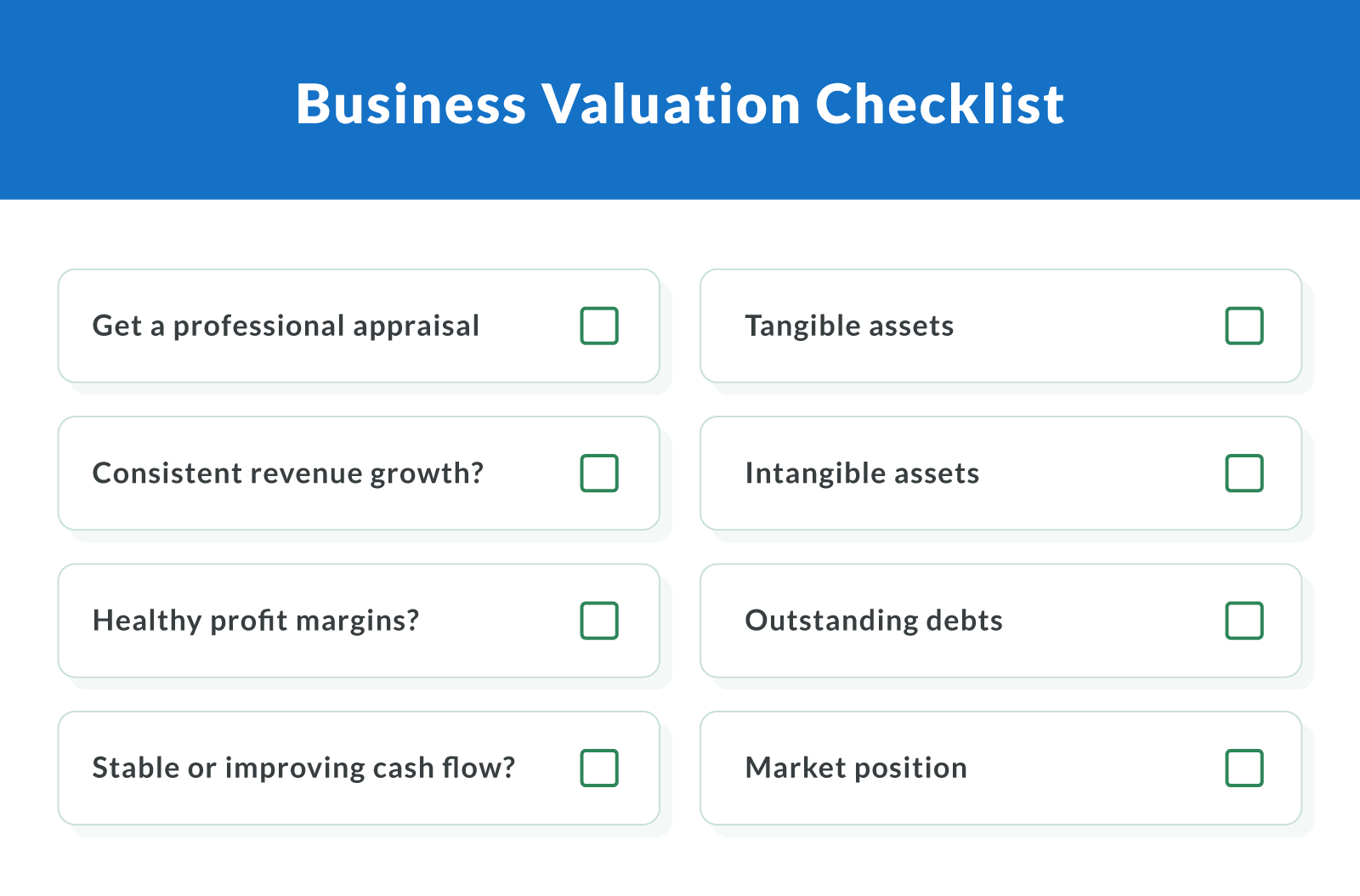
Checklist: Evaluating the Business You Want To Acquire
Before committing to a purchase, and before a lender will approve your loan, you need to complete thorough due diligence on the target business:
Get a professional appraisal. Get an objective assessment of the company's fair market value from a professional appraiser.
Consistent revenue growth. Confirm the business shows steady revenue increases over the past three to five years.
Healthy profit margins. Verify margins are in line with or above industry benchmarks.
Stable or improving cash flow. Review cash flow statements for red flags or inconsistencies.
Tangible assets. Inventory all equipment, inventory, and real estate included in the sale.
Intangible assets. Evaluate brand reputation, customer lists, and intellectual property.
Outstanding debts. Identify existing loans, unpaid taxes, or pending legal issues.
Market position. Assess customer base stability, market share, and growth potential in the industry.
Comparing Lenders and Loan Terms
All business acquisition loans are different. When evaluating your options, pay close attention to these factors.
Interest rates. Even a small difference in rate can add up to thousands over the life of the loan. Compare APRs rather than advertised rates; the APR includes fees and gives you a fuller picture of total cost.
Loan duration. Longer terms lower monthly payments but increase total interest paid.
Payment frequency. Monthly payments are standard, but some lenders offer bi-weekly options.
Prepayment penalties. Check whether you'll face fees for paying off the loan early.
Lender verification. Banks should be FDIC-insured, and lenders should have an NMLS registration number you can look up.
Additional fees. Watch for origination fees, closing costs, and annual maintenance fees.
Loan limits. Make sure the lender can fund the full amount you need. SBA 7(a) loans max out at $5 million, while some online lenders cap at $500,000 or less.
Here are some things to look for based on lender type:
Traditional banks often offer competitive rates but have strict requirements and longer timelines. Some banks offer acquisition loans as part of their business banking services, which can simplify the process if you already have an account.
Credit unions may provide more personalized service, flexible terms, and competitive rates for members.
SBA lenders combine favorable terms with government backing, though the application process is more involved.
Online lenders typically approve and fund faster but may charge higher rates.
Alternative Financing Options for Business Acquisitions
Traditional loans aren't the only way to fund a business acquisition. Depending on your situation, one of these alternatives may be a better fit.

Seller financing
The seller acts as the lender, letting you make payments directly to them. Qualification may be easier and terms more flexible, but you'll likely need a personal guarantee and carefully negotiated interest rates.

Equity financing
Bringing in angel investors, venture capital firms, or private equity groups provides capital without debt. The trade-off is giving up partial ownership and some control over business decisions.

Asset-based financing
Use the business's existing assets as collateral, including accounts receivable financing, inventory financing, and equipment financing.

Rollover for business startups (ROBS)
Use retirement funds (such as a 401(k)) to buy a business without early withdrawal penalties or taxes. It's viable but complex, so work with a financial adviser and tax professional first.

Home equity loans or lines of credit
Borrow against your home equity to fund part of an acquisition. Rates are often lower than business loans, but your personal residence is at risk if the business underperforms.

Franchise financing
If you're buying into a franchise, the franchisor may offer financing directly or through a preferred lending partner, often with reduced fees or better terms.

Crowdfunding
Less common for acquisitions, but some platforms let you raise capital from multiple small investors. This works best for businesses with a strong community presence or consumer appeal.
Each of these options has its own set of trade-offs. The right choice depends on your financial situation, the business you're acquiring, and your long-term goals.
How To Structure a Business Acquisition Deal
How you structure the deal affects loan payments, tax implications, and long-term profitability. The right approach depends on the business valuation, lender requirements, and what the seller is willing to accept.
Common deal structures include:
Seller financing component. Many acquisition deals include a seller financing element where the seller carries a portion of the purchase price. This can help bridge the gap between the loan amount and the total price, often at competitive rates.
SBA 7(a) loan structure. These loans can bundle real estate, equipment, and working capital into a single loan with long repayment terms, simplifying financing and reducing the number of monthly payments you need to manage.
Earnouts. A portion of the purchase price is tied to the business's future performance, typically based on annual revenue or profit targets. This reduces your up-front risk and gives the seller an incentive to support a smooth transition.
Equity partnerships. Bringing in a partner or investor can reduce your reliance on debt financing and spread the risk. This works well when the acquisition price exceeds what you can comfortably finance on your own.
Refinancing existing debt. If the business you're acquiring carries existing debt, some lenders will allow you to refinance that debt as part of the acquisition loan. This can simplify repayment and potentially lower the overall interest rate.
Structuring the deal strategically helps you secure favorable loan terms while protecting cash flow in the early years of ownership.
Take the Next Step Toward Buying an Existing Business
Buying an existing business is a major financial decision, but the right acquisition financing makes it manageable. A successful business acquisition involves thorough preparation and careful consideration of your financing options. Whether you opt for an SBA loan, traditional bank financing, or alternative methods, make sure you understand the terms and how they align with your business goals.
If you're ready to explore your options, visit Clarify Capital to connect with a funding specialist who can walk you through the process.
Frequently Asked Questions
Here, I'll answer some common questions about buying an existing business.
How Do I Qualify for a Business Acquisition Loan?
To qualify, you'll generally need a personal credit score of at least 650 (higher for traditional banks), a solid business plan, a down payment of 10% to 30%, and evidence that the target business has stable cash flow and revenue. Lenders also evaluate your industry experience, credit history, and overall financial health. SBA loans have additional requirements set by the Small Business Administration, including SBA size standards.
What Is the Monthly Payment on a $50,000 Business Loan?
Monthly payments depend on the interest rate and repayment term. At an 11% interest rate with a 10-year term (typical of an SBA 7(a) loan), the estimated monthly payment on a $50,000 loan is about $689. A traditional bank loan at 9% over seven years would cost roughly $804 per month. An online lender at 18% over five years would run approximately $1,270 per month.
How Hard Is It To Get an Acquisition Loan?
It depends on the lender and your qualifications. SBA and bank loans have stricter requirements (strong credit, multiple years in business, detailed documentation), and the process can take one to three months. Online lenders are generally easier to qualify for and faster to fund, but charge higher interest rates. Having a well-prepared application, a thorough business valuation, and a clear letter of intent significantly improves your chances with any lender.
How Much Income Do I Need for a $500,000 Business Loan?
Lenders typically want to see that the business generates enough cash flow to cover loan payments with room to spare; a debt service coverage ratio (DSCR) of at least 1.25 is a common benchmark. For a $500,000 SBA loan at 11% over 10 years, the monthly payment would be approximately $6,888. To meet a 1.25 DSCR, the business would need to generate at least $8,610 per month in net operating income (roughly $103,000 annually) after expenses.
Can I Use a Business Acquisition Loan for a Partner Buyout?
Yes. Business acquisition loans (including SBA 7(a) loans) can be used to buy out a business partner. The process is similar to purchasing a business from an outside seller: you'll need a business valuation, a buyout agreement, and documentation showing the company can support the loan repayment.

Bryan Gerson
Co-founder, Clarify
Bryan has personally arranged over $900 million in funding for businesses across trucking, restaurants, retail, construction, and healthcare. Since graduating from the University of Arizona in 2011, Bryan has spent his entire career in alternative finance, helping business owners secure capital when traditional banks turn them away. He specializes in bad credit funding, no doc lending, invoice factoring, and working capital solutions. More about the Clarify team →
Related Posts